Roof Repairs
Repairs on Inner West terraces and semis, where box gutters, parapet flashings and shared roof junctions cause nearly every leak.
Learn more →Water coming through the ceiling? Make-safe first, permanent repair after. Storm damage response across the Inner West, with photos for your insurer.
Repairs on Inner West terraces and semis, where box gutters, parapet flashings and shared roof junctions cause nearly every leak.
Learn more →Re-roofing Victorian and Federation terraces, semis and workers cottages, including slate and heritage-area work.
Learn more →Colorbond and metal roofing across the Inner West, including the low-pitch and concealed-gutter roof forms common on terraces.
Learn more →Restoration for Inner West tile roofs, and recoating where a heritage conservation area limits what can change.
Learn more →Box gutter replacement and parapet flashing across the Inner West, the single most common source of ceiling damage on attached housing.
Learn more →Roof inspections and written reports across the Inner West, including pre-purchase checks on terraces and slate roofs.
Learn more →Call (02) 8000 1103 and say where the water is appearing, how fast, and whether it is near any electrical fitting. That is the triage information.
Before anyone arrives: kill the power to that area at the switchboard if water is near a light or a fan. Get furniture clear. If a plasterboard ceiling is sagging and holding water, pierce it at the lowest point with something sharp and catch it in a bucket — a controlled release is far better than a collapsing sheet.
Storms here are not usually long. They are short, dense cells that drop a large volume in a few minutes, and they land on the most continuously built roofscape in Sydney.
Three things combine:
Capacity. Box gutters are designed for exactly this kind of burst — the 1% AEP five-minute intensity — and the margin built in is 30 mm of freeboard. A gutter already holding leaf litter has already spent that margin before the rain starts.
Nowhere for it to go. The lanes are narrow, the setbacks are nil, and a lot of the ground is paved. Runoff backs up rather than draining away, and that includes runoff still sitting in a sump.
One outlet. Most of these roofs drain through a single downpipe with no independent overflow to atmosphere. When it chokes, the water has only one remaining route, and that route is your ceiling.
The result is that Inner West storm damage is more often water ingress from a drainage failure than a tile physically removed by wind — though on the detached, more exposed roofs out through Strathfield and Concord, lifted ridge capping and broken tiles are common too.
On a freestanding house with a pitched tile roof, a tarp over the ridge is a legitimate temporary fix. On a terrace with parapets and no ridge, there is nothing to throw it over and nothing to tie it to.
So the method depends on the roof:
Make-safe is not the repair. It is what gets your house dry so the repair can be assessed and quoted properly.
A storm does not create most of these. It exposes them.
Which is why we always follow up with the question nobody wants: what was already failing before Friday night.
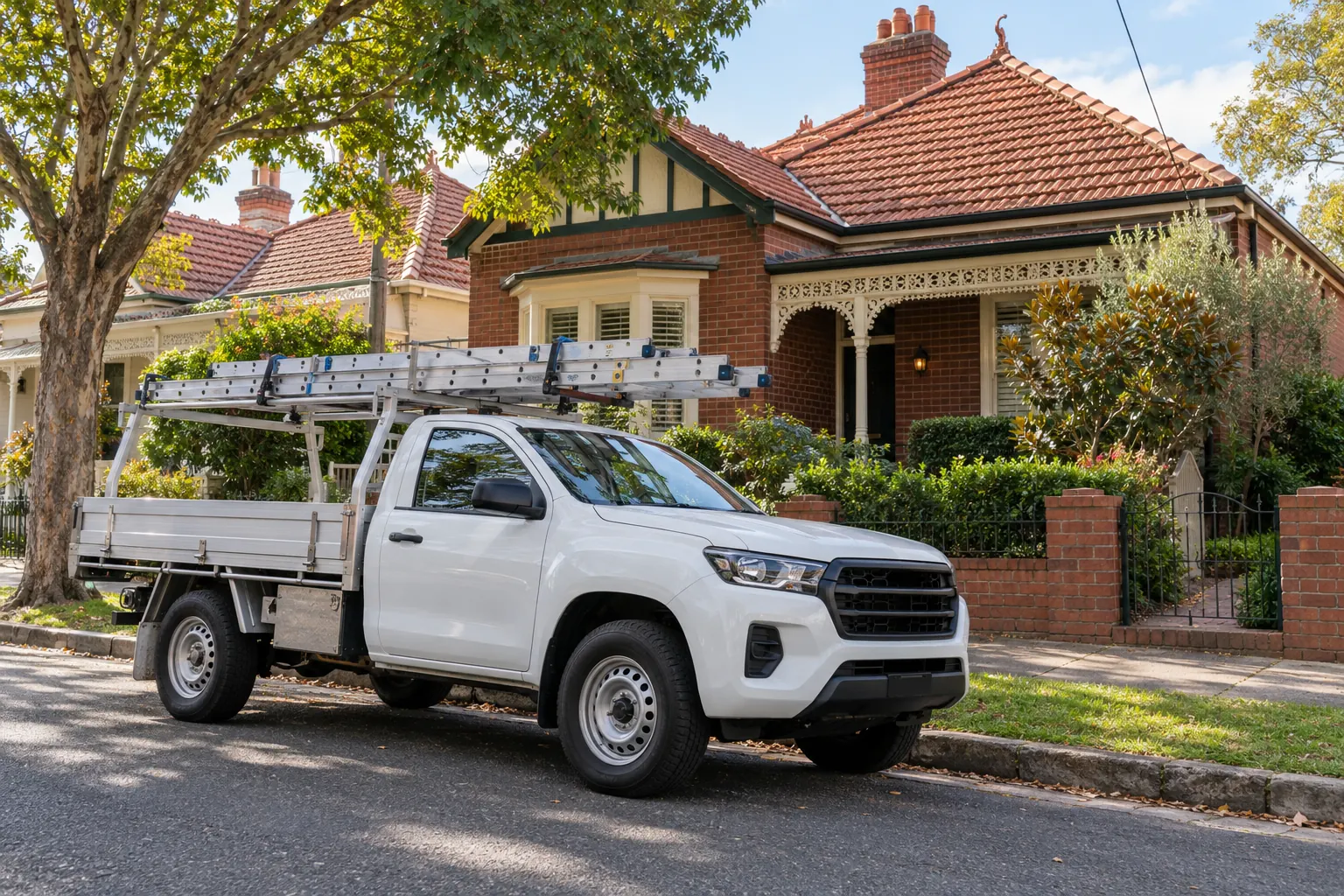
What we provide:
What we will not do is tell you a claim will be approved, imply a particular outcome, or write a report that frames worn-out components as storm damage. That helps nobody and tends to sink claims rather than support them. A roof inspection report can be prepared separately if your insurer asks for one.
Once the roof is dry, the permanent work is scoped. Depending on what failed, that might be a targeted repair, a box gutter reline or rebuild, or — if the storm was the last straw on a roof already at the end of its life — a full replacement.
Secondary damage gets checked too: wet insulation, soaked ceiling linings, softened rafter ends and wall plates. Water that has been in a roof cavity for a day does not simply dry out and disappear.
Work is carried out by established, licensed and insured roofing contractors working to NSW Fair Trading requirements. Completed repairs carry a written workmanship warranty, and the inspection and written quote are free.
Call (02) 8000 1103 or send the details. Response covers all 29 suburbs on the service areas list, from Balmain and Leichhardt down to St Peters and Sydenham.
Tell us what you need and we'll get straight back to you. Prefer to talk? Call (02) 8000 1103 and speak to someone local.
Call (02) 8000 1103Switch off power to the affected area at the board if water is anywhere near a light fitting or ceiling fan. Move furniture and lift rugs. Put a bucket under it and, if the ceiling is bulging, pierce it at the lowest point to let the water out in a controlled way rather than letting the sheet collapse. Then call and tell us what you can see.
Stopping water entering, with whatever the roof form allows. On an attached roof that can mean clearing a choked box gutter sump, temporarily diverting the flow, sheeting over a failed section, or strapping a cover across a parapet. A standard tarp thrown over a ridge does not work where there is no ridge and nothing to tie to, so the method is chosen on site.
The damage is less about flying debris and more about volume arriving fast. Short, very intense cells drop a lot of water in minutes onto a continuous, densely built roofscape with narrow lanes and limited drainage. Roofs with a single box gutter outlet and no overflow are the ones that fail, and they fail inwards rather than over the edge.
We document the job properly: dated photographs of the failure and the make-safe, a written description of what failed and why, and an itemised quote for the permanent repair. That is what an assessor needs. We cannot tell you whether a claim will be accepted, and we will not promise an outcome, because that decision belongs to your insurer.
No. Make-safe is triage — it buys you a dry house. The permanent repair is quoted and scheduled afterwards, once the roof has dried out enough to see what actually failed and how far the water travelled. Quoting a permanent fix while water is still running is guesswork, and it usually misses the secondary damage.